

Please review the question in our most recent post: A sticky situation
Then check below for answer:
The answer is C.
Klebsiella species
Certain capsular strains of Klebsiella, most commonly K1 and K2 capsular serotypes, result in the formation of hyperviscous mucoid strains of Klebsiella. This mucoid variant tends to be more resistant to complement mediated destruction, and in turn allows the organism to become more invasive, even among immunocompetent hosts. Liver abscesses, genitourinary tract infections, meningitis, brain abscesses and endovascular infections have all been reported in the literature. Although these mucoid strains were initially reported in Southeast Asia, it is now being seen all across the globe. The String Test involves taking a Q-tip and pulling on the colonies, which creates a ‘string’ of material that helps to identify this unique strain of bacteria.
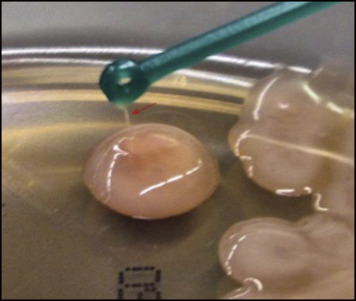
Although M. tuberculosis and Echinococcus can cause liver abscesses, they are not Gram negative rods and would not best explain his symptoms. Although Pseudomonas, Aeromonas and E.coli are Gram negative rods, none of these organisms would have colonies that would produce a positive String Test, as outlined in the above case.
REFERENCES:
 ID PittStop
Leave a comment