

Who can think of a better way to start the new year loved one than a cute puppy? A new year’s resolution to care for something cute? How about a nice dose of multidrug resistant campylobacter infection?
Back in September multiple state departments of heath, the CDC, and USDA-APHIS started investigating a multistate outbreak of human Campylobacter infections linked to puppies sold through Petland stores. So far, 17 states and 97 cases have been affected (Figure 1). Epidemiologic and laboratory evidence indicates that contact with puppies sold through Petland stores is a likely source of this outbreak. As 98% of patients reported contact with a Petland puppy in the week before the illness started. Twenty-one of those affected worked at a Petland store. Whole genome sequencing (WGS) confirmed the that the Campylobacter isolates from patients and isolates from pet store puppies were closely related.
Figure 1:
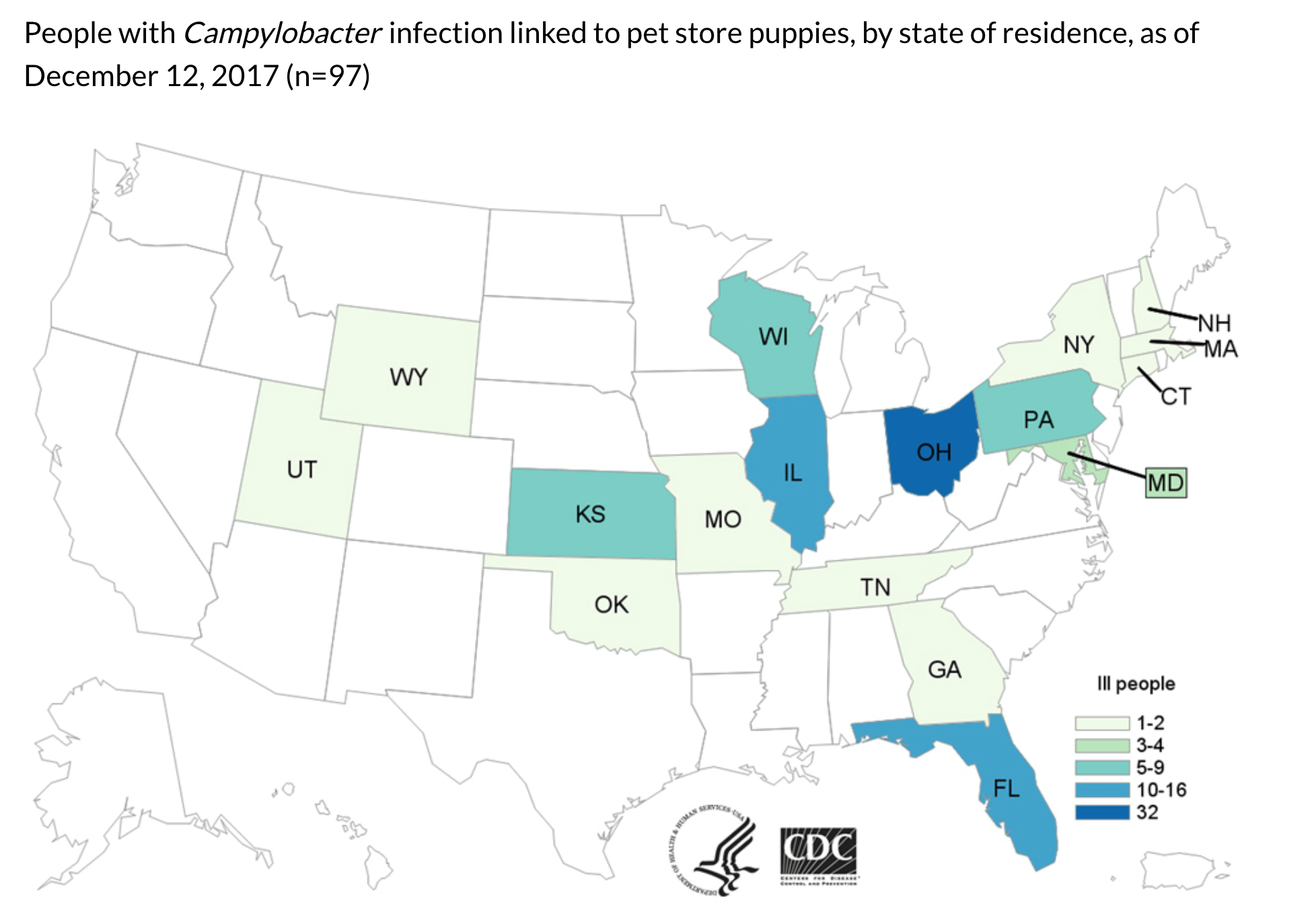
Source: https://www.cdc.gov/campylobacter/outbreaks/puppies-9-17/map.html
Campylobacter jejuni is a gram negative motile bacillus, with a characteristic spiral shape (Figure 2). It’s a human pathogen but is well adapted to birds who can be asymptomatic carriers, which is why undercooked chicken is a major cause of human infection. It is the most common cause of bacterial gastroenteritis worldwide. In the US it jockeys back and forth with salmonella as the number one cause of food borne diarrheal illness. Typical clinical features include diarrhea and abdominal cramping 2-5 days after eating that questionable leftover chicken salad. In addition to gastroenteritis it is also a common precursor to Guillain-Barre, with 20-50% of cases of GB being precluded by a campylpobacter. Rarely in immunocompromised hosts it can cause bacteremia, endocardtitis and meningitis. Stool culture is the gold standard for diagnosis. When suspecting campylobacter you must tell your microbiology lab as it needs to be incubated in a selective anaerobic CAM agar set at temp of 42 C (fun fact: that is the regular avian body temperature)
Figure 2:
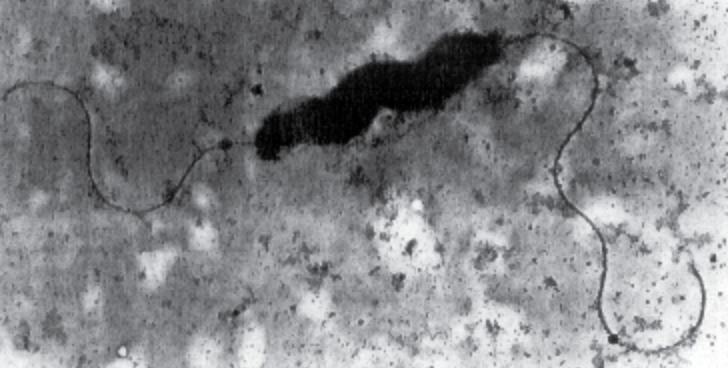
Source: Skirrow MB. Postgrad Doctor Middle East 1985; 8:50
Recently the IDSA released their new diarrheal guidelines that we have all been holding our breath (and noses) for. As per the guidelines those requiring treatment should receive a macrolide for 5 days as there has been rising FLQ resistance (up to 55% in SE Asia). Unless that is you got your campylobacter as part of the Petland puppy special as CDC’s antimicrobial susceptibility testing of Campylobacter isolates from stools and puppies isolates were resistant to azithromycin, ciprofloxacin, clindamycin, erythromycin, nalidixic acid, telithromycin, and tetracycline. Also, isolates from 2 of 4 people and 6 of 6 puppies were also resistant to gentamicin. Treatment will have be culture and susceptibility guided, in addition to supportive care and scrupulous hand hygiene.
Sources/References:
https://www.cdc.gov/campylobacter/outbreaks/puppies-9-17/index.html
https://www.idsociety.org/uploadedFiles/IDSA/Guidelines-Patient_Care/PDF_Library/Diarrhea.pdf
Written By Ahmed Babiker, 1st year ID fellow
 ID PittStop
Leave a comment